Friday, 13 July 2012

Perubatan tradisional


Perubatan Tradisional Melayu

Herba Melayu

Penggunaan herba di dalam Perubatan Tradisional Melayu adalah sebagai pelengkap kepada rawatan untuk pelbagai penyakit, atau pengambilannya diamalkan untuk mengekalkan kesihatan dan kesejahteraan. Penggunaan herba ini adalah berdasarkan kepercayaan dan amalan masyarakat Melayu.

Urut Melayu

Urut merupakan teknik rawatan yang menggunakan tangan, atau cara mekanikal untuk memanipulasi tisu badan, terutamanya otot. Ia digunakan sebagai satu kaedah untuk merehatkan badan, memberi rangsangan atau memulihkan seluruh badan (atau sebahagian daripadanya). Kaedah ini juga mengurangkan ketegangan otot, meningkatkan peredaran darah serta mengurangkan tekanan.

Bekam

Bekam merupakan salah satu amalan Perubatan Tradisional Melayu yang juga digunakan di dalam sistem perawatan budaya-budaya lain di seluruh dunia. Ia adalah satu teknik di mana cawan-cawan yang mengandungi udara bertekanan rendah (yang menghasilkan sedutan atau ruang separa vakum), diletakkan di atas kulit pelanggan. Bekam juga dikenali sebagai badkesh, bahnkes, nuhang, bantusa, kuyukaku, gak hoi, hijamah dan pelbagai nama lagi.

Perubatan Tradisional Cina

Akupunktur & Moxa

Teknik memasukkan dan memanipulasi jarum filiform ke titik tertentu pada badan untuk melegakan kesakitan atau bagi tujuan terapeutik dengan atau tanpa moxa yang melibatkan pembakaran mugwort (herba kecil seperti span) untuk membantu penyembuhan.

Herba Cina

Herba yang digunakan sebagai pelengkap kepada pelbagai penyakit / keadaan fizikal atau untuk kesejahteraan berdasarkan kepercayaan masyarakat Cina dan berdasarkan Chinese Materia Medica.

Tuina

Terapi Manipulatif Cina sering digunakan bersama-sama dengan akupunktur, moxa, bekam, ubatan herba Cina, tai chi dan qi gong.

Qigong

Amalan tradisional yang melibatkan kaedah pengumpulan dan pengedaran bersama dengan qi, pernafasan atau tenaga dalam badan. Diamalkan untuk tujuan penjagaan kesihatan, sebagai kaedah terapeutik, sebagai profesion perubatan, laluan rohani dan / atau sebagai komponen seni Cina mempertahankan diri.

Perubatan Tradisional India

Ayurveda

Juga dikenali sebagai "sains kehidupan', ianya adalah satu sistem perubatan tradisional yang berasal dari India. Dalam bahasa Sanskrit, Ayurveda perkataan terdiri āyus, yang perkataan, yang bermaksud 'hidup' dan Veda, yang bermaksud 'sains'.


Eiffel Tower

EIFFEL TOWER


You couldn't possibly visit Paris without seeing the Eiffel Tower. Even if you do not want to visit this world famous structure, you will see its top from all over Paris. The tower rises 300 meters tall (984 ft); when it was completed at the end of the 19th century it was twice as high as the Washington Monument, at the time the tallest structure in the world.

1889 World Exhibition

The Eiffel Tower was built for the World Exhibition in 1889, held in celebration of the French Revolution in 1789.
The construction was only meant to last for the duration of the Exposition, but it still stands today, despite all protests from contemporary artists who feared the construction would be the advent of structures without 'individuality' and despite the many people who feared that this huge 'object' would not fit into the architecture of Paris.


Today, there is no such aversion anymore among the Parisians, and one could not imagine Paris without the Eiffel Tower, in fact it has become the symbol of the City of Light.


Gustave Eiffel

The man behind the Eiffel Tower was Gustave Eiffel, known from his revolutionary bridge building techniques, as employed in the great viaduct at Garabit in 1884. These techniques would form the basis for the construction of the Eiffel Tower. He was also known for the construction of the Statue of Liberty's iron framework.

The structure took more than two years to complete. Each one of the about 12,000 iron pieces were designed separately to give them exactly the shape needed. All pieces were prefabricated and fit together using approx. 7 million nails.

The Tallest

Inaugurated March 31, 1889, the Eiffel Tower would be the tallest structure in the world until the completion of the Chrysler Building in 1930.

Thursday, 12 July 2012

Stress

How to Handle Stress..!


We generally use the word "stress" when we feel that everything seems to have become too much - we are overloaded and wonder whether we really can cope with the pressures placed upon us. Anything that poses a challenge or a threat to our well-being is a stress. Some stresses get you going and they are good for you - without any stress at all many say our lives would be boring and would probably feel pointless. However, when the stresses undermine both our mental and physical health they are bad. In this text we shall be focusing on stress that is bad for you.


Fight or flight response

The way you respond to a challenge may also be a type of stress. Part of your response to a challenge is physiological and affects your physical state. When faced with a challenge or a threat, your body activates resources to protect you - to either get away as fast as you can, or fight. If you are upstairs at home and an earthquake starts, the faster you can get yourself and your family out the more likely you are all to survive. If you need to save somebody's life during that earthquake, by lifting a heavy weight that has fallen on them during the earthquake, you will need components in your body to be activated to give you that extra strength - that extra push. 

Our fight-or-flight response is our body's sympathetic nervous system reacting to a stressful event. Our body produces larger quantities of the chemicals cortisol, adrenaline and noradrenaline, which trigger a higher heart rate, heightened muscle preparedness, sweating, and alertness - all these factors help us protect ourselves in a dangerous or challenging situation. 

Non-essential body functions slow down, such as our digestive and immune systems when we are in fight-or flight response mode. All resources can then be concentrated on rapid breathing, blood flow, alertness and muscle use. 


So, let's recap, when we are stressed the following happens:
  • Blood pressure rises
  • Breathing becomes more rapid
  • Digestive system slows down
  • Heart rate (pulse) rises
  • Immune system goes down
  • Muscles become tense
  • We do not sleep (heightened state of alertness)
Most of us have varying interpretations of what stress is about and what matters. Some of us focus on what happens to us, such as breaking a bone or getting a promotion, while others think more about the event itself. What really matters are our thoughts about the situations in which we find ourselves. 

We are continually sizing up situations that confront us in life. We assess each situation, deciding whether something is a threat, how we can deal with it and what resources we can use. If we conclude that the required resources needed to effectively deal with a situation are beyond what we have available, we say that that situation is stressful - and we react with a classical stress response. On the other hand, if we decide our available resources and skills are more than enough to deal with a situation, it is not seen as stressful to us. 


We all respond differently to a given situation for three main reasons
    1. We do not all interpret each situation in the same way.
    2. Because of this, we do not all call on the same resources for each situation
    3. We do not all have the same resources and skills.

Some situations which are not negative ones may still be perceived as stressful. This is because we think we are not completely prepared to cope with them effectively. Examples being: having a baby, moving to a nicer house, and being promoted. Having a baby is usually a wonderful thing, so is being promoted or moving to a nicer house. But, moving house is a well-known source of stress. 

It is important to learn that what matters more than the event itself is usually our thoughts about the event when we are trying to manage stress. How you see that stressful event will be the largest single factor that impacts on your physical and mental health. Your interpretation of events and challenges in life may decide whether they are invigorating or harmful for you. 

A persistently negative response to challenges will eventually have a negative effect on your health and happiness. Experts say people who tend to perceive things negatively need to understand themselves and their reactions to stress-provoking situations better. Then they can learn to manage stress more successfully.

Some of the effects of stress on your body, your thoughts and feelings, and on your behavior:

Effect on your body
Effect on your thoughts and feelings
  • Anger
  • Anxiety
  • Burnout
  • Depression
  • Feeling of insecurity
  • Forgetfulness
  • Irritability
  • Problem concentrating
  • Restlessness
  • Sadness
  • Fatigue
Effect on your behavior
  • Eating too much
  • Eating too little
  • Food cravings
  • Sudden angry outbursts
  • Drug abuse
  • Alcohol abuse
  • Higher tobacco consumption
  • Social withdrawal
  • Frequent crying
  • Relationship problems

What are the causes of stress?

We all react differently to stressful situations. What one person finds stressful another may not at all. Almost anything can cause stress and it has different triggers. For some people, on some occasions, just thinking about something, or several small things that accumulate, can cause stress. 

The most common causes of stress are:
  • Bereavement
  • Family problems
  • Financial matters
  • Illness
  • Job issues
  • Lack of time
  • Moving home
  • Relationships (including divorce)
The following are also causes of stress
  • Abortion
  • Becoming a mother or a father
  • Conflicts in the workplace
  • Driving in bad traffic
  • Fear of crime
  • Losing your job
  • Miscarriage
  • Noisy neighbors
  • Overcrowding
  • Pollution
  • Pregnancy
  • Retirement
  • Too much noise
  • Uncertainty (awaiting laboratory test results, academic exam results, job interview results, etc)
It is possible that a person feels stressed and no clear cause is identified. A feeling of frustration, anxiety and depression can make some people feel stressed more easily than others.

Diagnosis of stress

A good primary care physician (GP - General Practitioner) should be able to diagnose stress based on the patient's symptoms alone. Some doctors may wish to run some tests, such as a blood or urine, or a health assessment. 

The diagnosis of stress depends on many factors and is complex, say experts. A wide range of approaches to stress diagnosis have been used by health care professionals, such as the use of questionnaires, biochemical measures, and physiological techniques. Experts add that the majority of these methods are subject to experimental error and should be viewed with caution. The most practicable way to diagnose stress and its effects on a person is through a comprehensive, stress-oriented, face-to-face interview.

How to deal with stress


There are three broad methods you can follow to treat stress, they include self-help, self management, and medication.

Self help for treating stress
    Exercise - exercise has been proven to have a beneficial effect on a person's mental and physical state. For many people exercise is an extremely effective stress buster.

    Division of labor - try to delegate your responsibilities at work, or share them. If you make yourself indispensable the likelihood of your feeling highly stressed is significantly greater.

    Assertiveness - don't say yes to everything. If you can't do something well, or if something is not your responsibility, try to seek ways of not agreeing to do them.

    Alcohol and drugs - alcohol and drugs will not help you manage your stress better. Either stop consuming them completely, or cut down.

    Caffeine - if your consumption of coffee and other drinks which contain caffeine is high, cut down.

    Nutrition - eat plenty of fruit and vegetables. Make sure you have a healthy and balanced diet.

    Time - make sure you set aside some time each day just for yourself. Use that time to organize your life, relax, and pursue your own interests.

    Breathing - there are some effective breathing techniques which will slow down your system and help you relax.

    Talk - talk to you family, friends, work colleagues and your boss. Express your thoughts and worries.

    Seek professional help - if the stress is affecting the way you function; go and see your doctor. Heightened stress for prolonged periods can be bad for your physical and mental health.

    Relaxation techniques - mediation, massage, or yoga have been known to greatly help people with stress.

Stress management techniques

Stress management can help you to either remove or change the source of stress, alter the way you view a stressful event, lower the impact that stress might have on your body, and teach you alternative ways of coping. Stress management therapy will have the objective of pursuing one or more of these approaches. 

Stress management techniques can be gained if you read self-help books, or attend a stress management course. You can also seek the help of a counselor or psychotherapist for personal development or therapy sessions. 

Many therapies which help you relax, such as aromatherapy, or reflexology, may have a beneficial effect. 

Panda


 PANDA FACTS AND INFORMATION 

 Our facts and information is perfect for school reports, teachers, Panda Lovers and more!

General

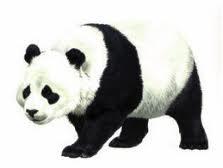
Panda Bears, cute and adorable, are on the endangered species list. Their habitat, extremely limited diet and poor reproductive and infant survival combine to extremely threaten their survival.There are two kinds of Pandas. The giant white and black Panda is the one that comes to mind for most of us. But, there is also the Red Panda which is also called the lesser Panda.
There are very few Pandas left in the wild and zoologists have been largely unsuccessful in breeding them in captivity up to now. The Chinese government has taken steps to protect these endangered animals.
Pandas are only found in a relatively small area in Asia. They date back two to three million years ago. Ancient chinese history and writings abound with mention of the Panda. They were kept by emperors and their hides were highly valued. They carried a mystique and were believed to be able to ward off evil spirits and natural disasters.
Pandas live in and around mountainous slopes and exist on a diet largely comprised of bamboo shoots. They eat most of the day to consume the food they need for survival. There are about fifteen types of bamboo, reach with varying life cycles. Panda Bears eat primarily bamboo shoots. As die-offs in the bamboo cycle occur, the panda population also fall.
Westerners, in particular Americans, have a strong fondness for these cute creatures. If you talk to a Chinese person, they do not share this same fondness and wonder why we take such a liking to them.

The Giant Panda Bear


The Giant Panda is white and black. An adult can grow to 3 1/2 to five feet and weigh up to 350 pounds. In the wild, adult female pandas give birth once a year and usually produce two cubs in the litter? A newborn cub will weigh around 5 ounces is all white and blind at birth. The black spots develop after about a month. A cub will begin to eat bamboo at about six months and be fully weaned after nine months. At the end of the first year they are about 70 to 80 pounds. The cubs will stay with their mother for about 1 1/2 years. A Panda reaches maturity at five to seven years and live in the wild for about 25 years.
While we generally refer to pandas as "bears" there is much discussion around whether they are bears, raccoons or their own species. They share some features of bears and some of raccoons. Let's let the zoologists continue their debate and we can focus on admiring these adorable creatures.
Did you Know? Giant Panda Bears do not hibernate during the winter. Due to their leaner diets, they do not build u the excess fat needed to hibernate.
Giant Pandas are an endangered species. There are only between 600 - 1000 in the wild. There are also about 60 in zoos around the world. Low reproductive rates, high infant mortality rates, poaching and human settlement in the Panda's territory are the primary causes of it's dwindling numbers. In addition, Pandas are solitary creatures and brred in the wild infrequently.
Did you know? The Chinese word for Panda is "Xiongmao" or Giant Cat Bear.
Giant Pandas live on mountainous slopes in western China and Eastern Tibet. Sichuan province is home to many of these bears. Because of their limited number, there are very few in zoos. The main diet is bamboo shoots. They will also eat a small amount of fish and rodents. They range in very small areas, of about one square mile. Females range in even smaller areas.
In 1972, the Chinese government gave two Giant Pandas (a male and a female) to the U.S. They were given as a gesture of friendship for then President Richard M. Nixon opening U.S. relations with China. the giant Pandas were placed in the Washington zoo. The male was named Hsing-Hsing and the female Ling-Ling. This author 's love for Pandas began with a visit to the zoo. Ling-Ling died of heart failure in 1992. Hsing-Hsing at 28 years old, is still alive, although he had cancer surgery in 1997. There are also two Pandas in the San Diego zoo,
The bears mated and Ling-Ling gave birth to three sets of twins during the 1980's. Unfortunately, all of the cubs died shortly after birth. Since the death of Ling-Ling there have been no Pandas in the U.S. Reproductive rates of Pandas are low, with low fertility rates for both the male and female. To make matters more difficult, the breeding period lasts a mere 24 - 48 hours.Major efforts are underway by both the Chinese and the U.S. to develop successful artificial insemination of captive pandas to increase their numbers. Hopes for the Panda Bears' long term survival probably depend on the success of these programs.
For even more information, see the American Zoo and Aquarium Association(AZA).

Red Pandas or Lesser Panda


While the Giant Panda is more like a bear, the Red Panda is more like the Raccoon family. In physical appearance, it bears an unquestionable resemblance to the raccoon. The Red Panda is reddish brown in color. It grows to about two feet and weighs six to twelve pounds.
The Red Panda also lives in China and Tibet. In addition, it can be found in Burma, India and Nepal. While the Giant Panda sticks mostly to the ground, the Red Panda spends a lot of time in the trees. It's diet is broader. While it eats bamboo, it also consumes acorns and roots.

Ramli Ibrahim

About Ramli Ibrahim


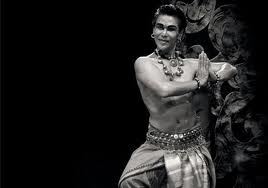
Ramli Ibrahim an acclaimed dancer, choreographer and artistic director of Sutra Dance Theatre is recognized nationally as a cultural icon and a dynamic force within the arts scene, evident in the various accolades conferred about him including the Fulbright Distinguished Artist Award 1999, the Lifetime Achievement (BOH Cameronian) Award 2003, ANGARAG Lifetime Achievement Award 2006 from Guru Debraprasad Dance Institute, Bhubaneswar (Orissa) and most recently Anugerah Karyawan Seni for Choreographer from the Ministry of Culture, Arts & Heritage. Trained in classical ballet, modern dance and Indian classical dance, Ramli performed extensively with the Sydney Dance Company (1977 1982). Upon returning to Malaysia, he established Sutra Dance Theatre (1983), which is Malaysia¡¦s premier dance company.


Ramli is the free spirit and dynamic force in Malaysian theatre with an open mind for the old and new. He has been described as a mover and a shaker, sweeping aside prevalent provincialism with his integrated vision of the arts. Ramli has set the standards of excellence in the overall image-making of Malaysian theatre and has inspired and cultivated a whole generation of Malaysian dancers apart from collaborating with an impressive cross section of theatre-makers. He has become a household name in raising the status of Indian classical dance in Malaysia to what it is today.


As a teacher of Bharata Natyam and Odissi, he has groomed some of the finest dancers of Malaysia. Ramli studied Bharata Natyam under Padmashri Adyar K. Lakshman and Odissi under the late Guru Deba Prasad Das. He is intimately associated with Odissi, which he has successfully implanted in the Malaysian dance soil. Sutra dancers have the respect and acclaim of dance connoisseurs in India, and have set a significant cross-cultural landmark and bridge for both countries. For Ramli, theatre is the all-encompassing universal vehicle for his creative vision: it expresses life in the richness of its myths and rituals.


Friday, 6 July 2012

Khasiat

KHASIAT SUSU IBU
Susu ibu mempunyai kandungan lemak, gula, air dan protin yang sempurna untuk tumbesaran bayi. Banyak kandungan yang ada di dalam susu ibu tidak ada di dalam susu lembu.
Bayi lebih senang menghadam susu ibu dari susu formula. Ia mengandungi kurang protin dan protin yang ada juga lebih nutrisi dari susu formula. Susu ibu mengandungi antibodi yang menolong melindungi bayi daripada bakteria dan virus. Antibodi ini juga menolong mereka menentang jangkitan kuman dan penyakit. Bayi yang menyusu susu ibu didapati lebih kurang mendapat jangkitan paru-paru, jangkitan kuman pada pundi kencing, telinga dan juga septicimia.

Tidak ada bayi yang alah kepada susu ibu. Susu ibu sentiasa steril, tidak pernah tercemar atau rosak. Menyusu badan menjimatkan wang. Tidak perlu membeli, menyukat dan membancuh di tengah malam buta.

Menyusu menyebabkan anda lebih rapat dengan bayi kerana sentuhan akan membuatkan bayi merasa nyaman, selamat dan selesa. Menyusu boleh memyebabkan badan anda membakar kalori dengan lebih cepat. Anda senang kembali ke bentuk badan asal. Ia juga menolong rahim mengecil dengan lebih cepat dan mengurangkan pendarahan. Menyusu mengurangkan risiko kanser payudara dan kanser ovari.

Bayi yang menyusu badan lebih sihat. Kurang kadar sembelit dan cirit birit. Bayi kurang risiko untuk menjadi terlalu gemuk.

Menyusu akan menyenangkan ibu. Ia tidak memerlukan rancangan, packing atau alatan menyusu formula.